Broadfork™

The tour · 7 of 11

When it raises something, it shows you the source.

On the day this picture was taken, the sample garden had one note for the weather and five for the beds. Each one can say why.
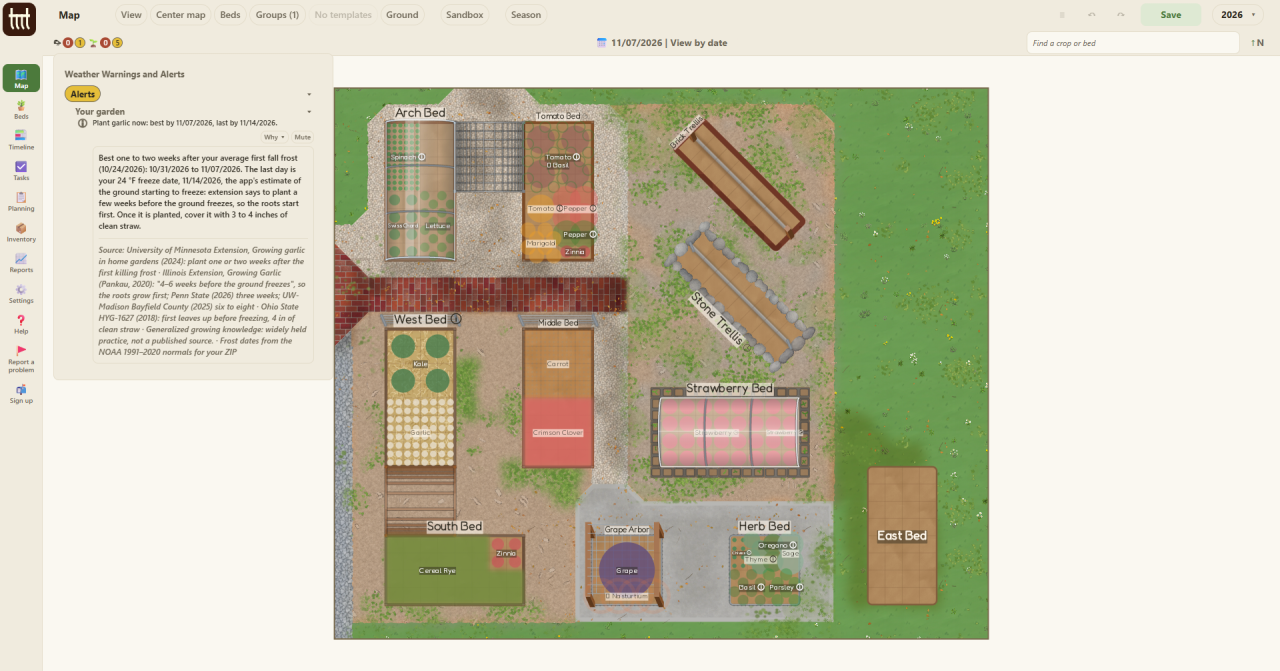
The weather list open over the map with Plant garlic now opened to its Why: best one to two weeks after your average first fall frost, 10/31/2026 to 11/07/2026, the last day your 24 degree freeze date, then a source paragraph at the foot naming where each point came from.
A WhyPlant garlic now, opened to its Why: your own dates and what to do. The last lines are the sources, and where a point is common practice and not a published source, it says that too.
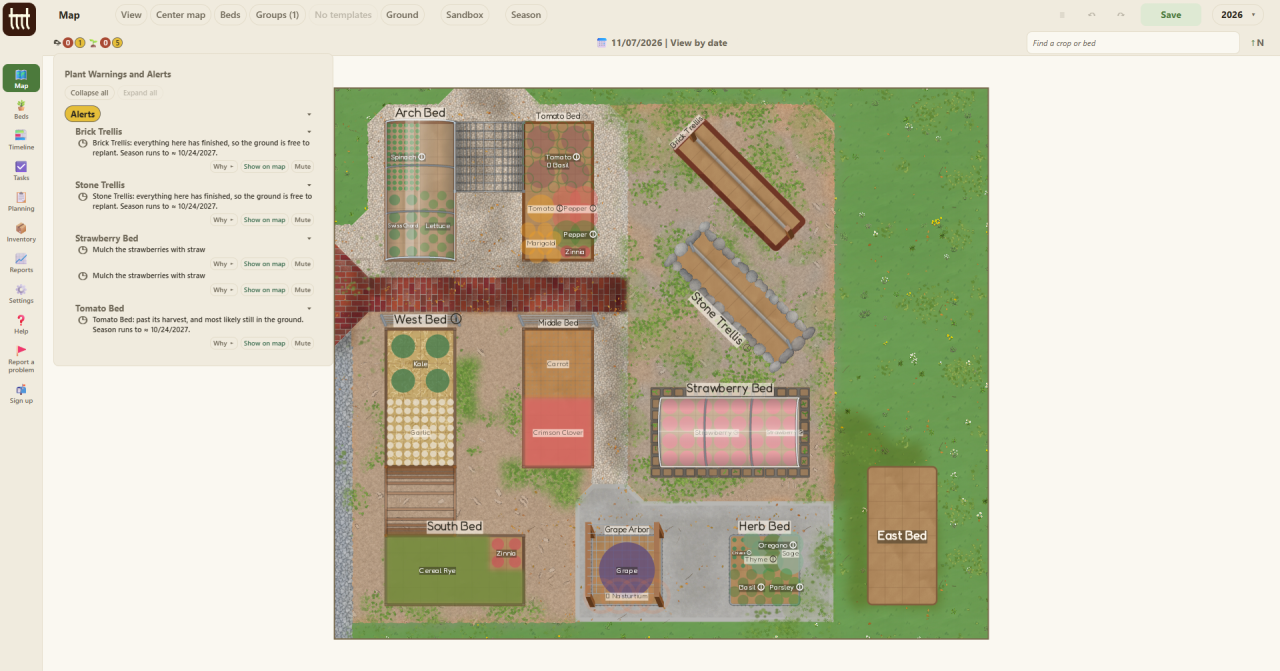
The Plant Warnings and Alerts list open over the map: a yellow Alerts label, then the Brick Trellis, Stone Trellis, Strawberry Bed and Tomato Bed, each with its notes and Why, Show on map and Mute buttons.
The listThe badges at the top left open to this: five notes for the beds, grouped by bed, each with Why, Show on map and Mute.
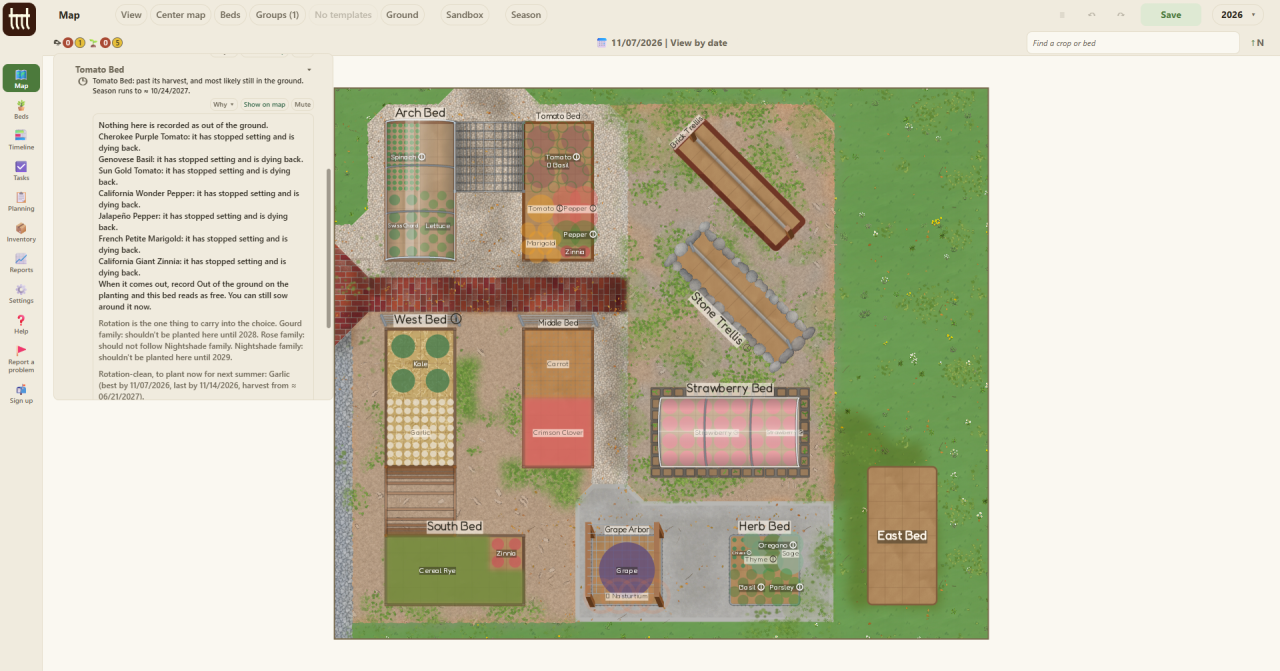
A note on the Tomato Bed opened to its Why: nothing here is recorded as out of the ground, each planting has stopped setting and is dying back, then a rotation note, and garlic named as a clean crop to plant now for next summer.
A bedThe Tomato Bed's Why: each planting and where it stands, then what rotation allows here, and what could go in now for next summer.

Broadfork notices things worth a look: a crop that will meet frost before it is done, ground that has come free, a bed about to need its straw. Each one is a short note with a Why. Open the Why and it says what it saw, what you can do about it, and what it is going by: a published guide or common practice, and it says which. A note it cannot source is not raised at all.

When it does not know something, it says so rather than guessing. Unknown is an answer it can keep. Mute the notes you do not need and they wait under Silenced by you.